

Oil skyrockets to 118 dollars — Fears of new military flare-up in Persian Gulf following US elections
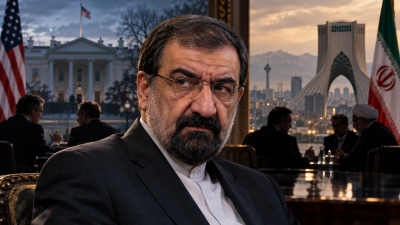
Brent crude futures surged to a six-month high, as new attacks on commercial vessels in the Strait of Hormuz and energy facilities in Saudi Arabia intensify fears of a fresh escalation in the Middle East conflict. Donald Trump is examining military options against Iran and leaving open the possibility of resuming operations after the November 3 midterm elections. International oil prices are recording powerful upward pressures, with Brent crude futures for January delivery reaching 118 dollars per barrel on Friday, October 30, 2026, marking their highest level in six months. The new surge is attributed to growing anxiety over the security of energy infrastructure and maritime transport in the Persian Gulf, following fresh attacks against commercial ships in the Strait of Hormuz, as well as energy installations in Saudi Arabia. Developments reinforce fears that the Middle East conflict may enter a new, even more dangerous phase following the US midterm elections next Tuesday, November 3. Market attention now focuses on the next moves of the Trump administration, as the American president continues to be briefed on military options against Iran. According to a new report by the Wall Street Journal, Trump has implied that a brief resumption of Operation "Epic Fury" could take place after the midterm elections, directly impacting global energy shock risks.
Trump and Vance prepare next step — Iran negotiations on ice
According to information, Donald Trump continues to receive briefings on available military scenarios regarding Tehran, while the diplomatic front remains essentially stagnant. A letter dispatched this week by US Vice President JD Vance to Iran's supreme leadership has received no response to date. Tehran, for its part, maintains an unyielding stance, making clear that any peace negotiations presuppose the lifting of the US blockade on Iranian oil exports and the release of frozen Iranian funds. The deadlock in negotiations, combined with new military attacks, creates an exceptionally dangerous environment for the global energy market, reshaping Persian Gulf military escalation.
JPMorgan: Impossible even to evaluate the real price of oil
The complexity of the current situation in the oil market is highlighted by Natasha Kaneva, energy specialist at JPMorgan. "What is the price of oil? Eight months after the start of the war with Iran, what should be a simple question has transformed into something extraordinarily difficult to answer," she characteristically notes in a briefing memo. According to Kaneva's current model, the theoretical base price of Brent stands near 94 dollars per barrel, significantly below the 118-dollar level recorded in the market. The wide discrepancy underscores the difficulty of pricing geopolitical risk, as markets are called upon to incorporate not only existing supply disruptions but also the prospect of new military escalation, altering geopolitical oil pricing.
Bloomberg: Global oil inventories constrain market defenses
Bloomberg journalist Rebecca Feng points out that the global market now possesses far smaller safety margins against a new disruption in oil supply. As she reports, global land-based oil inventories that could be utilized immediately stood near their lowest level since at least 2016, according to the latest available data from the International Energy Agency (IEA). This development renders the market uniquely vulnerable to potential fresh supply chain disruptions. Concurrently, data from maritime tracking firm Kpler show that oil export volumes from the Persian Gulf have surpassed pre-war levels of 23.3 million barrels daily. However, Morgan Stanley analysts warn that overall market oil supply, including deliveries to domestic refineries, remains below last year's levels. This means that the apparent recovery in exports has not fully restored balance in the global energy market, exposing global crude oil inventories.
UBS: Brent could skyrocket even higher if diplomacy fails
Growing anxiety over Middle East developments is also underscored by Dominic Ellis, energy specialist at UBS. As he points out, Brent touched a six-month high on Friday, surpassing 117 dollars per barrel following new attacks on ships in the Strait of Hormuz and energy facilities in Saudi Arabia. A decisive role is also played by the absence of progress in recent diplomatic outreach efforts with Iran. JD Vance's letter to Iranian officials remains unanswered, while Tehran reiterates that it stands prepared to participate in talks only provided the US commits to lifting the blockade on Iranian oil and unfreezing funds. At the same time, the Wall Street Journal reported Thursday that Donald Trump continues to be briefed on military options against Iran and has left open the possibility of resuming attacks following the US midterm elections. Dominic Ellis also cites another indication of growing security anxiety in the Middle East: top executives from Exxon and Chevron canceled their participation in the ADIPEC conference scheduled for next week in Abu Dhabi. In his assessment, the US midterm elections are not expected to serve as a catalyst for restarting US diplomacy in the Middle East, regardless of the election result. He warns that while current prices and short-term contracts have begun incorporating a higher probability of escalation and disruptions in energy production and exports, the market continues to underestimate medium- and long-term conflict impacts. "Prices could skyrocket even higher unless more substantial indications of diplomatic progress emerge than those seen to date," forms the core conclusion of his analysis, warning of unprecedented Brent price spikes.
Fresh flare-up or return to negotiations? The dilemma for the Persian Gulf
The next chapter of the Persian Gulf crisis sat at the center of a discussion organized earlier this week by Jefferies. Participating in the discussion was Jonathan Panikoff, Middle East specialist at the Atlantic Council and former US intelligence official, alongside analysts Aniket Shah and Lloyd Byrne. The core question posed concerns developments following the US midterm elections: will a restart of negotiations with Iran occur, or will a new round of military strikes follow? With Brent sitting at a six-month high, diplomatic margins narrowing, and global inventories retreating, the oil market confronts an exceptionally dangerous scenario. The primary risk no longer concerns merely attacks on energy installations and commercial vessels, but the prospect of a broader conflict that could disrupt oil exports anew from one of the planet's most critical energy regions. For international markets, the coming days may prove decisive. If diplomacy fails and Trump selects the resumption of military operations, oil could confront a powerful new upward shock, carrying repercussions for the global economy, inflation, and financial markets, defining Middle East energy supply risks.
www.bankingnews.gr









Σχόλια αναγνωστών